
The Ugly Stepsister
It's a world away from Disney - and it packs an unexpected punch

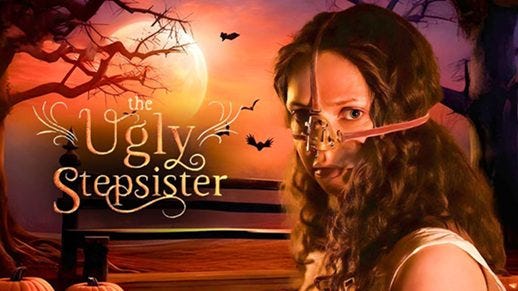
I’m not much of a horror fan. Body horror, even less so. Partly because I’m squeamish, but mostly because I don’t particularly enjoy watching people in pain or fear: it’s just not something I find entertaining unless it’s played for laughs. But I have to admit, I did rather enjoy this Norwegian movie.
The main reason it appealed to me is that I love the concept of taking a well-known story and presenting it from the point of view of a minor character or a villain. It’s something that’s always intrigued me. Apparently when I was a kid, I tried to write the story of Queequeg’s brother. (But in Moby-Dick, Queequeg hasn’t got a brother, you say. Exactly, he was left behind and he misses his big brother.) Later, I wanted to retell Star Wars from the perspective of the loyal security chief who discovers that two of the rebel leaders are his own long-lost children. (Seriously, George, you should have called me. I’d have come up with something much better than Phantom Menace.) And in 2024, I did it in Mrs Patel and the Secret Agent, where I started with a Bond-style chase and then switched it to showing the aftermath from the perspective of a street seller whose melon stall was destroyed.
It’s already quite a popular genre in both books and movies: there’s Wicked and Maleficent, of course. Madeline Miller gave us Circe, Margaret Atwood wrote the Penelopiad, and John Gardner retold Beowulf from Grendel’s perspective. In terms of classic fairy tales, we’ve already got Gretel & Hansel and Snow White: A Tale of Terror. And let’s not forget Rosencrantz and Guildenstern Are Dead.
I’m willing to bet that we’re all familiar with Cinderella, but very few of us have ever wondered what it would be like to be one of the ugly stepsisters. They’re generally portrayed as either cruel (though not as cruel as the wicked stepmother) or comedic, or both. They’re figures of fun simply because they’re not pretty - which, if you think about it for a minute, is actually horrible. Body shaming isn’t a new thing.
So, put yourself in the shoes (or slippers) of one of the ugly sisters for a minute. You want to be happy, you want to find a husband, you want a normal life, but all the attention is on your pretty stepsister. You know you’re not beautiful, and that seems to be the only thing that anyone cares about. That’s already depressing enough. But writer/director Emilie Blichfeldt takes it one step further and into nightmare territory.
The magic of the "same old" story
The other reason I liked this is because I’m a huge fan of putting new twists on old stories. Actually, I’m a huge fan of just retelling the old familiar stories, with or without new twists. I’ve been thinking a lot recently about the role of storytellers in society, and I’ve come to believe that one of our most important roles is to keep the old tales alive. Our myths, our legends, our folklore, our cultural memory is all built on stories. They encapsulate the things we find important, our morals, our values, and our shared history. Stories are how we teach people what it is to be heroic, to be good, to do the right thing. And, conversely, what it is to be wicked. By retelling these stories, we reinforce what matters to us - whether that’s chivalric romances or fairy tales or even war stories. Yuval Noah Hariri even argues in Sapiens: A Brief History of Humankind that shared fictions and the human ability to tell stories is what created civilization. (If you haven’t read it, do. The graphic novel version is pretty damn good too.)
One of my very first Substack posts was about this very topic. We keep telling writers that they need to be “original”, but that doesn’t necessarily mean having to come up with completely new stories. We can - and should - keep reworking old stories for new audiences, keeping them alive, keeping them fresh, and ensuring that we continue to keep them relevant. It’s part of our job as storytellers.
Originality is overrated

Great books don't have to be original. There's nothing wrong with retelling a well-known story.
In The Ugly Stepsister, Emilie Blichfeldt keeps the core of the Cinderella story intact, but adds a whole new layer of meaning that’s deeply relevant in this social media age. She tackles themes of body image and the pressure to conform to a physical ideal, the way women are judged on their looks, and, by implication, the horrors of plastic surgery. And, by anchoring it to a story we’ve all known and loved for generations, she has a powerful impact that she wouldn’t have had if she’d been “original”.
So, don’t let the gore or the gross-out moments put you off. The Ugly Stepsister might look like just another piece of low-budget body horror on the surface, but there’s much more to it than that.
There's quite a trend in making "bad guys" sympathetic, Wicked-style, and that can be interesting. But much more I'd like to see the story that shows us the baddie's viewpoint without trying to excuse them. Plenty of good drama has dealt with unlikeable protagonists: Walter White, Vic Mackey, the Roys. I don't buy that Vladimir Putin or Yoweri Museveni, say, are secretly well-meaning but have been alienated by the way the rest of us see them. Instead of the usual old redemptive arc beloved of Hollywood writers, let's have the story of the wicked witch or the dark lord that says, "OK, yes, they're utter shits, but they're also utterly compelling."
Lisa and I loved this film. Central performance by Lea Myren is amazing. The whole look and feel of the film just gets under your skin. Love your comments on the film.