
My May reading list
Plus some thoughts on writing blogs and how they can hinder the creative process.

Possibly the single most important thing I’ve read this month about the craft of writing was a BlueSky post that said something like this:
“Once I stopped reading blogs on how to be a better writer and just started writing, I became a much better writer.”
A few days later, I encountered an interview with Philip Pullman that basically said, don’t worry about what everyone else is writing, just write what you want to write. He quoted William Blake: “I will not reason and compare: my business is to create.”
There’s so much conflicting advice out there (some of which is, admittedly, from me) that it just becomes overwhelming and paralyzing. These are the unbreakable rules of successful writing. You must do this. If you’re doing this, you’re doing it wrong. This is what readers/agents/publishers/editors demand. Five rookie mistakes that every novice [genre] author makes.
After a while, well-meaning advice, even if it’s sound advice, starts to feel like more of an obstacle than anything else. It’s as if you’re trying to write while a chorus of strangers constantly criticize everything you’re doing, even though they’ve never read your work.
Are my characters strong enough?
Are my descriptions too elaborate or too sparse?
Am I clearly conveying the sub-text here?
Is my pacing too fast or too slow?
Did I just commit a mortal sin by using the passive voice?
Am I showing enough or is there too much telling?
Does two paragraphs count as an infodump?
Am I being original enough?
Does this look like it was written by an AI?
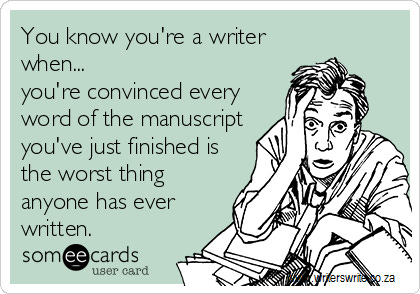
There are probably a hundred other things I should be thinking about, and when I figure out how to deal with those, there’ll be a hundred more. Whatever I write, there’s going to be someone out there telling me I should be doing it better.
Writing a book is hard work, we’re our own worst critics, and most writers already suffer from more than enough self-doubt. We don’t need more of it.
I remember a publisher once telling me that most recipe books aren’t written for people who like to cook: they’re written for people who like to read recipe books. It’s the same in the self-help and productivity world: most people who read those books don’t actually follow through on what they learn. I suspect books (and blogs) on how to write appeal largely to a similar market: it’s as if their readers love the idea of writing, but are struggling to actually do the writing. But if they could just learn this one piece of hidden wisdom, it would all fall into place and magically, their masterpiece would emerge. Sadly, as we all know, it doesn’t work like this.
I’m coming to the conclusion that when I’m in writing or revising mode, I should probably stay away from writer blogs. It’s best if I just stick to putting into practice what I already know, doing what feels right in the moment and ignoring all the voices telling me what I should be doing. I’ll save the advice for when I’m between books, when I feel like I need inspiration or when I’m ready to try something new and need some fresh insights. That’s the time I’ll benefit from it. (And yes, I am fully aware of the irony of writing about writer blogs on my writer blog.)
Anyway… to the bookshelf!
It’s a comparatively short list this month: it’s mostly non-fiction. I’m still working on Count of Monte Cristo from my April list, which turned out to be a lot longer than I realized — almost a thousand pages. I’m loving it, but realistically it may take me a while. It was originally written as an 18-part monthly serial, so maybe I should read it that way. Anyway, here’s what’s new.
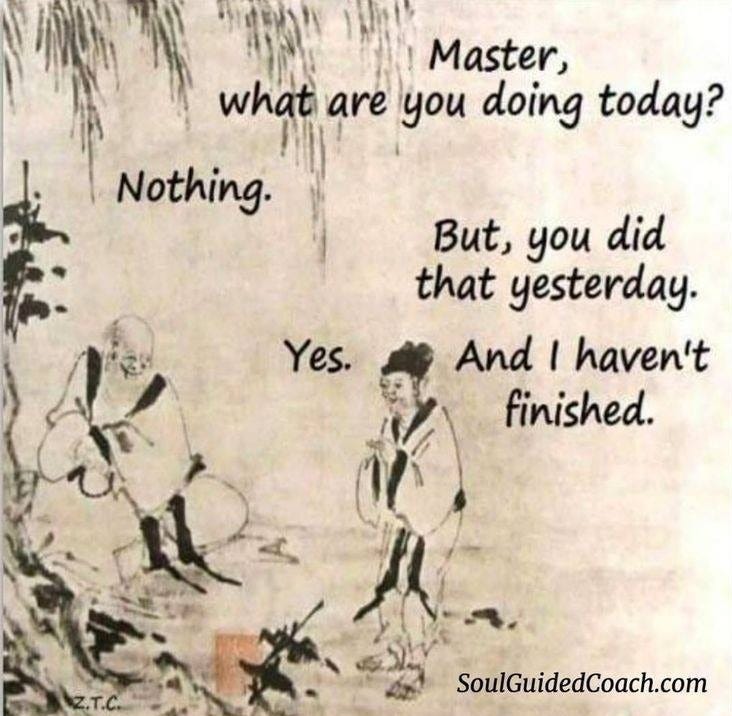
The Brain at Rest: How the Art and Science of Doing Nothing Can Improve Your Life, by Joseph Jebelli. As I wrote in one of the first pieces for my other Substack, Unhack Your Brain, I’m a very big fan of doing nothing - not because I’m lazy, but because doing nothing helps me find the physical and mental energy to do and enjoy the things I want to do. I first learned this from Bruce Lee when I was a teenager (in a book, not in person, obviously - Zen and the Martial Arts, by Joe Hyams), and it took me decades to understand the difference between doing nothing and not doing anything.
The One and the Ninety-Nine, by Luke Burgis. An examination of our sense of individual and group identity, and how to fit into society without feeling like you’re being forced to conform. (To be published in June.)
The Creative Act: A Way of Being, by Rick Rubin. Yes, that Rick Rubin. I never really thought much about him until I saw him in a documentary with Paul McCartney and realized he’s one hell of a cool dude. This is his vision of the path of the artist. Apparently it’s best read in small, bite-size pieces, much like my collection of books of Taoist and Zen wisdom. Maybe I’ll read a bit of that over my morning coffee instead of reading the (increasingly depressing) news.
Leonardo Da Vinci: The Complete Paintings and Drawings, by Frank Zöllner and Johannes Nathan. A massive two-volume look at everything he created, filled with top-quality illustrations. Della bought it for me years ago after we went to an exhibition of his works, but I’ve only ever glanced at it. It deserves better than that.
Son of Nobody, by Yann Martel. A story of the Trojan War, told in parallel with the story of the translator. The translator’s story is all in the footnotes. As I’ve written before, I quite like footnotes in fiction, but I’m worried this will feel like too much of a gimmick.
Alchemised, by SenLinYu. Dark gothic fantasy horror. Looks intriguing, but it could very well end up in the DNF pile. It’s apparently a reimagining of her Harry Potter fanfic crossed with The Handmaid’s Tale. That’s not the most promising start, I admit, but the reviews are mostly good, so I’ll give it a shot.
Audio-wise, there’s more non-fiction.
I’m steeling myself for a series of lectures on Heidegger, alongside readings of some of his most important works. I’m honestly not sure how much of this I’ll be able to handle. This could take me a while. I’m also enjoying Beyond Horizyns, presented by my good friend CJ, which is a weekly look at various aspects of spirituality and science, very much in the same vein as Unhack Your Brain.
I’m lightening it up with the usual assortment of Doctor Who and early SF, including works by Bradbury, Leiber, Harrison and a lot of pulp authors I’ve never heard of, plus Forster’s The Machine Stops, which is a story everyone should read. And lastly, I recently discovered that my friend James Curcio did a podcast as part of his transmedia Fallen Cycle epic, so I’ll be giving that a listen too.
What’s on your reading/listening list?
Ambitious list this month, Matt. I've heard of the Rubin book, but I don't know. Another book on creativity? I think I've had my fill, besides Im too busy being creative.
“…if labour was equitably shared out amongst everyone, resulting in shorter workdays, unemployment would decrease and human happiness would increase due to the increase in leisure time, further resulting in increased involvement in the arts and sciences. […] Russell therefore argues that four hours of work per day would be enough to keep the whole population living in sufficient comfort, while the rest of the time would be devoted to leisure."
(Wikipedia entry on Bertrand Russell’s In Praise of Idleness)
I can 100% get behind this. Added to this month’s reading list.