
DNF or persevere?
When should you carry on reading a book you're not enjoying?


In general, I’m pretty ruthless about giving up on a book. If it hasn’t grabbed me within about fifty pages, I’m done. If it’s badly written or full of typos, I probably won’t even get that far. It’s not like I’m short of things to read: I’ll just move right onto the next thing in the TBR pile, and that’s plenty big enough to keep me going.
The Discoverie of Bokes

There are just too damn many books and not enough time. There are four million books published every year - ten thousand every day. If you want someone to actually read your book, you’ve got to stop them in their tracks so hard that they’ll choose your book over every other book they could possibly choose at that moment in time. Or, more accurately, over everything else they could possibly do with that time.
But there are times when I’ll push on with a book even if I don’t like it. That’s not simple masochism or stubbornness: it’s because I think - I hope - that I’ll get something valuable out of it, even if that’s not entertainment.
The most common reason I keep going these days is when I’m revisiting something I read - or tried to read - in my youth. There are two diametrically opposed variants of this scenario.
The one I loved.
More and more, I’m finding myself drawn to re-reading books I read many years ago. They’re not always as good as I remember. They were great at the time, but I’ve changed in the intervening years or decades and my taste has changed. Or else they were new and exciting back then, but now they’re just the first examples I found of stories and tropes that have been done to death since. (This also applies to music, movies, comics, and other things.)
When I find myself being disappointed by a re-read, I usually - though not always - try to get to the end. I’m not entirely sure why this is: this should be the easiest to quit, because I should know what I’m missing out on. I think it’s because I’m trying to understand exactly why I don’t like it. What’s changed in those years to change my opinion? Clearly the book is still the same book, so whatever’s different is something in me.
The one I hated.
I was made to read a lot of "classics” at school, when I was far too young to appreciate them. And there were a lot of authors my friends seemed to like that I just didn’t get on with: Philip K. Dick, Vonnegut, Pynchon, Peake, Le Guin, Tolkien (unless it’s The Hobbit, yes, really!) and so on. Clearly these aren’t bad books: it was just bad timing from my personal perspective. Coming back to them much later in life, I’m able to bring a new perspective to them. Sometimes, I find myself enjoying them immensely. (Deep breath: I am not about to go on a rant about why making teenagers read complex adult books, particularly old ones, is a terrible idea that can put them off reading for life. I’ll do that another day.) But much of the time, I still don’t like them.
This is where stubbornness kicks in. If I’ve made the decision to read one of those books, I’m not going to bail without giving them a fair second chance. If I can get all the way through and a book still hasn’t grabbed me, then I think it’s fair to say that it’s just not my thing. At least it’s not for lack of trying.
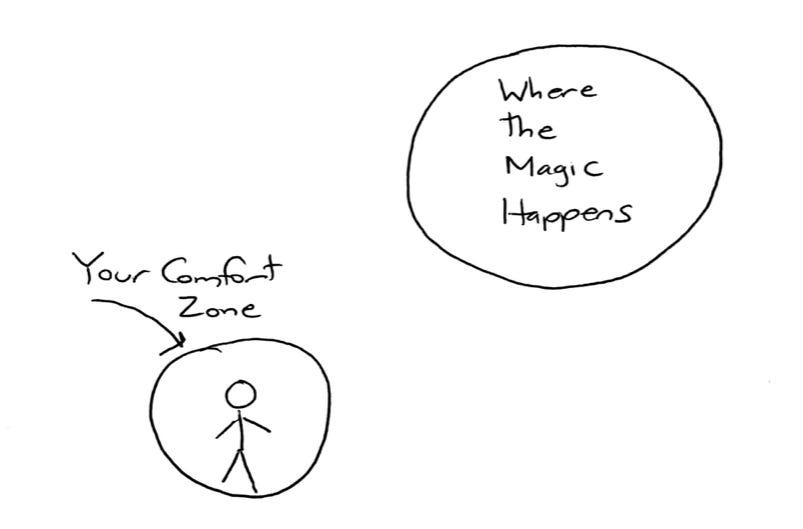
However, there’s another category of perseverance that’s entirely different. These are the books that I find challenging, but which will, I hope, ultimately reward the effort I put into it.
The one I wouldn’t have picked.
I get a lot of recommendations from friends, book clubs, and so on. They’re not always my kind of thing, but if someone I trust is telling me a book’s worth reading, I’ll usually do my best to get through it. For example, The Seven Husbands of Evelyn Hugo is the kind of book club fiction I normally avoid like the plague. After a few chapters, I was ready to quit. But, to my surprise, I ended up liking it a lot more than I was expecting.
It’s important to get out of my comfort zone and try different genres or styles every so often. Even if I don’t like a book, I’ll probably learn something useful about narrative technique, characterization, pacing, story structure, or writing dialogue. And, because it’s coming from a place I’m not used to, I’ll probably learn something quite unexpected. If nothing else, I’ll learn something about the person who recommended the book.
Book club fiction

I love my local book club, Title Waves, at the Bailey Library in Winthrop, Maine. Partly because I’m a hermit most of the time, and it gives me a reason to emerge from my cabin in the woods and interact with actual people face to face. (Except when the weather’s bad and it turns into a Zoom meeting.) And partly because it’s fun to chat abou…
The one that’s not supposed to be easy.
Some books are just demanding. Maybe they have a bizarre structure. There are extreme examples such as House of Leaves or Tristram Shandy, or non-linear books like Cloud Atlas. (And Ella Minnow Pea or Ducks, Newburyport, which I haven’t read, but intrigue me.) Others are just dense and slow going: I love Rushdie, but I wouldn’t say for a minute that any of his books (other than Haroun and the Sea of Stories) is easy to read. And then you’ve got the complex narratives, like Wayfinder or The 7 1/2 Deaths of Evelyn Hardcastle, where nothing quite makes sense until you put it all together at the end. Or else, like Alan Moore’s Jerusalem, they’re just epically long and detailed, and it’s just a long slog that requires a lot of stamina.
Finishing books like that can give you a great sense of achievement: if you DNF those, it feels like a defeat, and you’re basically admitting to yourself that you’re just not up to it. In some cases, it can take me years to get through them (The Wealth of Nations, or the various versions of Grail romances such as Parzival or Perceval, for example), but I will make it in the end. That’s no guarantee I’ll enjoy them, but I’m hoping that there’ll be a worthwhile payoff when I’m done.
I’m still happy to toss a book aside if the prose is clunky or the plot stalls out before the first cup of coffee is finished. But there’s a vital difference between a book that’s bad and a book that’s hard going. Fifty pages is more than enough for the average book, but for those that challenge, change, or confront me, I’m generally, though not always, willing to put in the work to get all the way to the end.
The first book I remember giving up on was Fred Saberhagen's Empire of the East. I'd saved it up as something to read when I had the chance, but after fifty pages I found I just wasn't interested in what happened. I felt guilty that time, but now I'll abandon a book after half a dozen pages if it doesn't grab me -- sometimes with the intention of coming back to it later, but seeing as I must have about five thousand books and maybe fifteen more years to read them in I will only get more ruthless.
For me that book was John Le Carre’s A Perfect Spy. Tried three times to read it and failed. Fourth time, OMG. One of the best books I’ve ever read…